
It was a shock to discover last week that the poet and translator Richard McKane died a few years back, in 2016. I didn’t know Richard well; he taught me Russian for a few months in the mid-nineties but we kept in touch for some years afterwards and he was an exceptional man, someone I’ve always remembered with respect and affection.
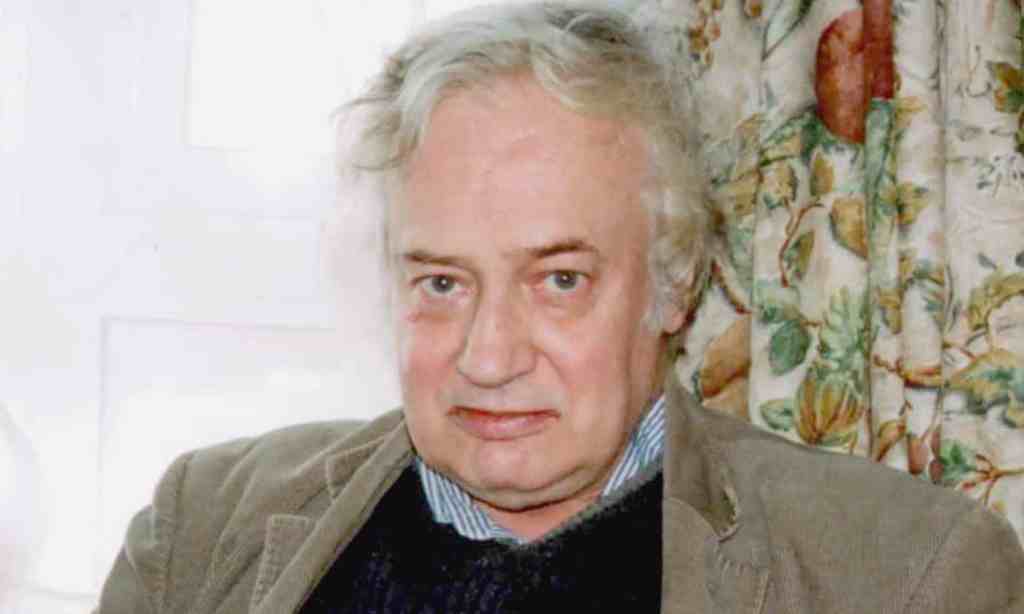
The classes started after we met by chance at a London event of PEN International, the association that helps persecuted writers around the world. At the time I was out of work and looking around for new opportunities while doing odd bits of freelance writing. Unlike me, Richard was already seriously involved with charity work, he would go on to spend twenty years translating for people from Turkey and Russia who’d been victims of torture and wrongful imprisonment.
Less competition
Maybe I could get work reporting on the countries that used to be part of the Soviet Union, I was wondering. Perhaps report on the newly-accessible countries stretching from Europe across the steppes of Central Asia to China? Competition from other journalists wasn’t as intense as elsewhere in the world.
It wasn’t a great time in my life; I’m ashamed to admit I didn’t always turn up for Russian lessons or even give Richard notice I wouldn’t be there. In retrospect I can see my illness was making me exhausted (even after eight hours of sleep); at the time I thought I was just feckless and felt ashamed.
Courteous and kind
Yet Richard was always courteous and patient with me, despite me letting him down. His love of Russia and its language ever-present, stunning me by its depth, detail and intensity.
I never managed to become fluent in Russian, though thanks to Richard I grasped the basics and did eventually get work reporting from there. Richard stayed loosely in my life for a while after the classes ended, keeping in touch via Christmas cards, but we lost contact after I moved house several times in rapid succession – life was chaotic in those days.
Sad news
It was still sad when I searched for Richard online last week, thinking it’d be nice to make contact again, maybe drop him a line to say hello. The searches showed only that he was gone, and I cried.
At the time of the lessons I didn’t properly appreciate how distinguished Richard was; he was such a modest man, his humility maybe stemming from a deep understanding of human suffering.
Understood human suffering
Yet he most certainly was distinguished. With his then-wife Elizabeth, Richard translated leading Russian writer Osip Mandelstam’s poems into English. His twenty-year work on Akhmatova resulted in a definitive translation that introduced her to a new audience of western readers.
Richard had a sympathy deeper than words with a country “of such random terror, poverty and grinding depression” as he describes Russia in the foreword to Anna Akhmatova. And, like his literary heroines and heroes, he was able to encapsulate, preserve and transmit those traumatic emotions in poetry.
Committed to memory
Like all too many people at that time, Akhmatova knew rather more than she would have liked about suffering. From first-hand experience, unfortunately. Her first husband was shot and killed in 1921 over his alleged involvement in an anti-Bolshevik plot; her son was taken prisoner. Everything she wrote she committed to memory, afraid to write anything down that could be used against her.
People recognised Richard’s empathy with Russian anguish. Peter Levi, professor of poetry at Oxford in the eighties, said: “McKane’s Akhmatova versions are unparalleled . . . They have a restrained brilliance and an extraordinary personal power.”
Emotionally involved
We can tell from the detail, sensitivity and depth of his translations that Richard was deeply emotionally involved with his work, indeed that connection is unmissable since his translations carry such charge and resonance. How else could he have considered a business selling Oriental rugs, only to decide against the move, ‘dissuaded . . . by the fact that I became emotionally attached to particular rugs’?
We met at a time when so many of us (myself included) were focussed on narrow goals of acquisition, money, self-importance. Not Richard. A principled and humble man, he followed the path less travelled, using his talent to give voice to the suffering of others.
 Helen Fowler Writer