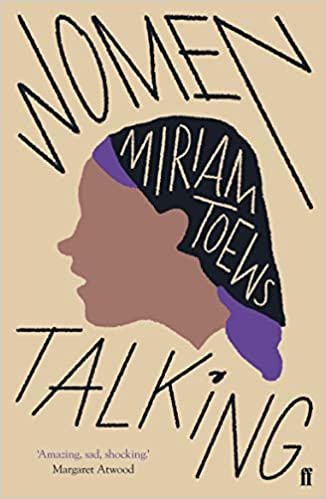
Women Talking by Miriam Toews, August 2018, Alfred A. Knopf
Women Talking, [15], 2022, director Sarah Polley, scriptwriters Sarah Polley and Miriam Toews
In both the film and book of this name, the women do rather more than just talk. Which is good, considering the horrors they’re facing. Yet you can’t help but sympathise deeply with the terror of women who’ve never been allowed to learn to read or write or to leave their village without a male to accompany them. It’s hardly surprising they find it difficult to strike out on their own.
We’re shocked to discover what’s been happening to the women in this remote Mennonite community in Canada. Our shock deepens when we learn that this gruesome story is based on real events in which women were actually drugged and raped by their neighbours and relatives.
We first meet the women as they struggle to process what some local men have been doing to them and they meet to debate how to respond. For some years the women have been waking up bruised , sore and bleeding, only to be told their injuries are the work of imaginary “demons”.
The women finally manage to catch one of these “ghosts” as he tries to leg it across a field. And so they work out that a group of men has been drugging them with bovine anaesthetic before attacking them in their own beds. Needless to say, the only humour in this grim set-up is dark and sardonic, but it’s a triumph there’s any humour at all.
The movie adaptation stars Rooney Mara, Ben Whishaw, Claire Foy, Frances McDormand and Jessie Buckley, all of them excellent. In it we see the women eventually agree on a plan of action, despite their doubts, confusion, and understandable fears.
We see how high the stakes are for the women as we discover the victims range from a child of three to someone in her seventies. In horrified anguish we watch as the three-year-old’s mother struggles to get even basic antibiotics for her small child, who’s been infected with an STD after being raped.
It’s heart rending stuff. The women are so defenceless, so devastated by the crimes. And it’s all graphic, too. Some wake up to discover themselves infected with disease. Others become pregnant. One young girl miscarries after being impregnated by her own brother in a particularly distressing story.
There are subtle but important differences between the movie and novel, with the film focussing more exclusively on the women and omitting an entire subplot involving Ben Whishaw’s schoolteacher August.
In the film, it’s a young girl, Autje, who provides the voice-over for the action. In contrast, in the book the story’s told through minutes taken by August, who divulges more about his background in the novel’s closing pages. None of the book’s closing material makes it into the film, which feels more in tune with this being a movie about women finding their voices and deciding their own destiny.
It’s not only a novel about women talking, as Toews herself has said; it also depicts women building confidence in themselves, doing so to the point where they can act to protect themselves and their children.
The movie won best adapted screenplay in March’s Oscars. Deservedly so, I’d say.
 Helen Fowler Writer