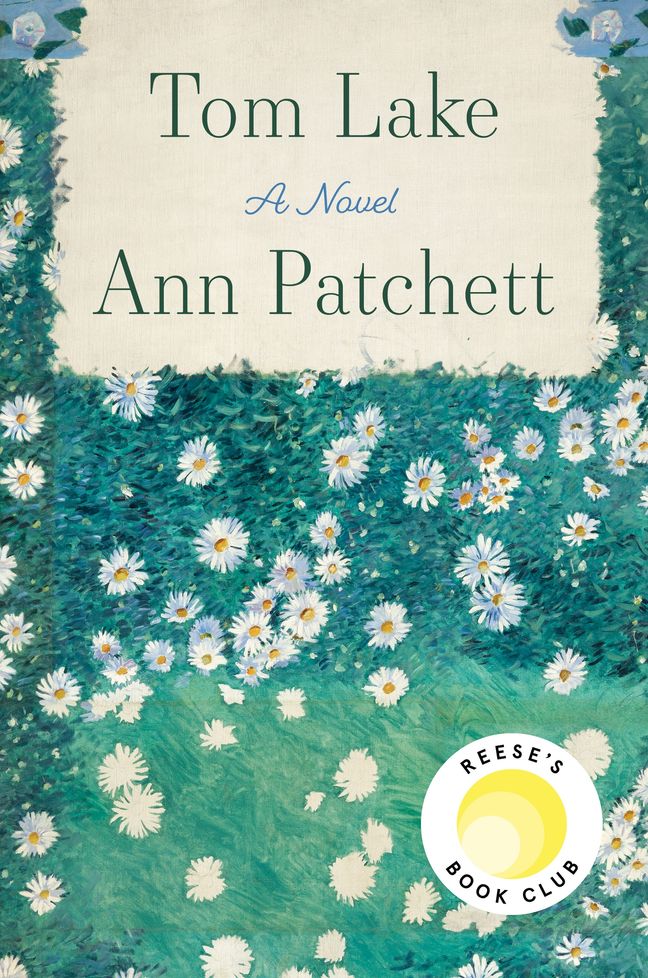
There’s a dreamy, elegiac quality to this novel about Lara, a mature wife and mother coming to terms with her racier past as an actress as she relates carefully selected parts of her life to her three adult daughters.
Weaving a new fabric
Written during lockdown, the novel itself is actually set during an unspecified pandemic and centres on Lara, her husband Joe and their children Nell, Maisie and Emily, all of whom have returned home to the family farm amid the crisis. Forced to run the farm without the usual workforce to gather in ripened cherries, the family goes out into the fields themselves. As they pile fruit into buckets carried round their necks, they talk, laugh, argue and reminisce, demanding their mother tell them more about her life before they arrived.
As they talk, evoked in Patchett’s beautifully evocative, witty prose, we start coming across questions so many of us face in real life. Chief among the questions we see them wrestle with is how does any parent reconcile the young, heedless person we were before children with the responsible, sober-minded people most of us become as parents? It’s a question plenty of us face in our lives and one that Patchett brings vividly to life with metaphors around the mending and re-making of clothes, since Lara is also a skilled seamstress as well as an actress and parent. Metaphors around farming, gardening and flowers underscore the themes with an extra touch of elegance and grace. Lara’s work as an actress brings to mind famous Shakespeare lines about life itself being a kind of performance, a sentiment that finds plenty of support in this novel. Perhaps, Patchett seems to suggest, we are all constantly remaking ourselves as we live and age, weaving a new fabric to clothe ourselves, repairing and renewing as we embark on a new stage in the cycle of life.
Uncomfortable but privileged
As well as actress and seamstress, Lara is also a canny storyteller, who creates a spellbinding narrative by withholding information just as she shares other material with us. It’s never explicitly stated, but we sense from the onset that Lara has some big secrets that we yearn to know, as Patchett builds our sympathy for her along with our curiosity. Although Lara does divulge early on some of her long-ago experiences with a lover who goes on to be a famous movie star, she doesn’t tell her children everything that happened to her, with one particularly key omission that only emerges in the last few pages. The result is that we, as readers, come away feeling we may have ended up knowing more about Lara than her own children do, an uncomfortable but privileged feeling. It was sad to reach the last page of this bravura performance.
 Helen Fowler Writer