The Only Story, Julian Barnes, Vintage
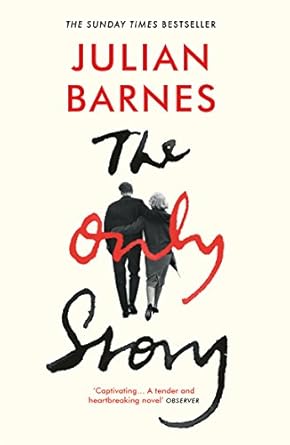
It’s the sixties and Paul is back home in Surrey on holiday from university when he meets and starts sleeping with the much older Susan, whose mastery of the tennis court attracts him almost as much as her wit and lithe figure clad in whites. Ironic, damaged and knowing, Susan proves irresistible to Paul.
It’s an odd sort of relationship, though just about believable. Paul cuts an austere, intellectual figure, oddly adult despite his youth, while I’m afraid his paramour comes across as matter of fact and superficial, despite boasting a winning backhand on court (nice metaphor there) and a liking for nicknames.
Ruckus
However, they not only get together but stay that way for many years, eventually moving to their own place in London after getting thrown out of the tennis club once the whispering begins.
In some ways they’re a surprisingly mature couple and sensible, too, going together to a Harley Street doctor to get birth control for Susan. But Susan is already a grown-up, we try to remember, in her forties at this point and with two daughters older than Paul, although Barnes doesn’t stress her age. Only much later do we get to understand the possible reason why she’s behaving like an adolescent.
Fossilised
At this earlier stage we’re still mystified by Susan’s love for Paul and her marriage to the man she calls Mr Elephant Pants, a brutal and repellent individual who treats her with real cruelty. We’re left wondering why she doesn’t leave him; he’s not only nasty to her, he also hasn’t made love with her in years.
We later learn that the poor woman was molested while still a child, possibly disposing her towards abuse, Barnes hints. With sensitivity, Barnes links Susan’s present-day willingness to tolerate abuse and inability to orgasm during intercourse with her earlier childhood abuse.
Brutality
Although we remain broadly sympathetic to Susan, it becomes more and more of an effort, since Barnes doesn’t entirely put us on her side. We wince, though, as we read of her husband’s violence to her; he’s so brutal he leaves the unfortunate woman with missing teeth. As a result, she’s left needing a horrible dental bridge.
Detached, yet cheery
Then, finally, we begin to understand Susan’s detached cheeriness in the face of these awful setbacks: she’s a secret drinker. We feel bad for her, understanding her pain and need to blot it out using whatever means she can.
Blighted by Susan’s alcoholism, the relationship decays, Paul on one occasion noting “the toothpaste in her mouth [was] not fully disguising the smell of sweet sherry.”
Yet despite Susan’s descent into addiction, Paul remembers her views on people with apparent sincerity.
“He always remembered what she had said to him after they left Joan’s house that day. Like most young men […] he had viewed life – and love – in terms of winners and losers. […] Susan had put him right. Susan had pointed out that everyone has their love story. Even if it was a fiasco, even if it fizzled out, never got going, had all been in the mind to begin with: that didn’t make it any less real. And it was the only story.”
Love, really
The older I get, the more I tend to agree with Barnes about the importance of love to us all. Apologies if I’m sounding like this guy, but the truth is that, like it or not, love really is the only story, defining much of our lives. Even, or, perhaps, especially when we remain unaware that love – or lack of it – is what’s driving us.
 Helen Fowler Writer