I’ve had to call reception at the GP surgery 128 times, and just after 8am, too, doing this before even having that first, life-giving cup of tea of the day. I’m not loving this experience. But the voice message playing on a loop warns about prosecution for anyone daft enough to cause trouble; I can take a hint, so breathe deeply and try to stay calm.
Eventually, I get to talk to a receptionist. A real, live human being. She’s doing her best but tells me in an exhausted, strained voice that all the same-day GP appointments have gone. It’s still only eight fifteen in the morning. I try my best to stay calm but begin to feel hysterical.
“I’m in pain all across my arms” I begin.
Normally people say at this point: ‘You poor lamb.”
Today, there’s no response. These guys are under real pressure.
After a short wait, the receptionist comes back to me, sounding as though she’s had to wrestle with a sea monster to find me a slot.
“Three pm today. With Dr Starkey.” She hangs up almost as soon as she’s finished imparting this information.
Briefly, I hope she finds a job somewhere with better conditions.Then walk into my bedroom, close the curtains and change out of my nightie into leggings and a thin cotton top with deliberately unfinished hems at the wrists and waist.
Cruella de Ville knew about this
Once I finally get to see the doctor, I learn I’ve got a case of something called shingles. Itchy and sore. That doesn’t sound like an especially big deal to me, but the doctor has a worried expression on his face. “
“And you had optic neuritis in 2008?”
Yes, I nod grimly, remembering my terror at the temporary loss of sight in my right eye.
“They said back then it wasn’t multiple sclerosis.” My voice is squeaking, I can’t seem to clear it, hard as I try. “They said there weren’t any other lesions, just the one in my eye.”
The doctor’s anxiety doesn’t dissipate like I hoped.
“That was six years ago, yes?”
I nod, reluctantly.
“No more trouble since then?”
“No, nothing else.” I don’t like to add that I feel a teeny bit like Cruella de Ville now, with that streak of white in her hair. I’ve got one of those ‘natural highlights’ too.
The doctor glances at the panel of white in my hair and turns back to his screen.
Pizza cooked on max
“Shall I send you for an MRI?” he asks, as if suggesting nothing more alarming than a a stroll in the garden.
He looks at me hopefully as he waits for my response; his pen poised over a pad of official-looking paper with health centre details printed on it.
“It would be to see what’s happening after that blindness episode a few years back,” he says, failing to reassure me.
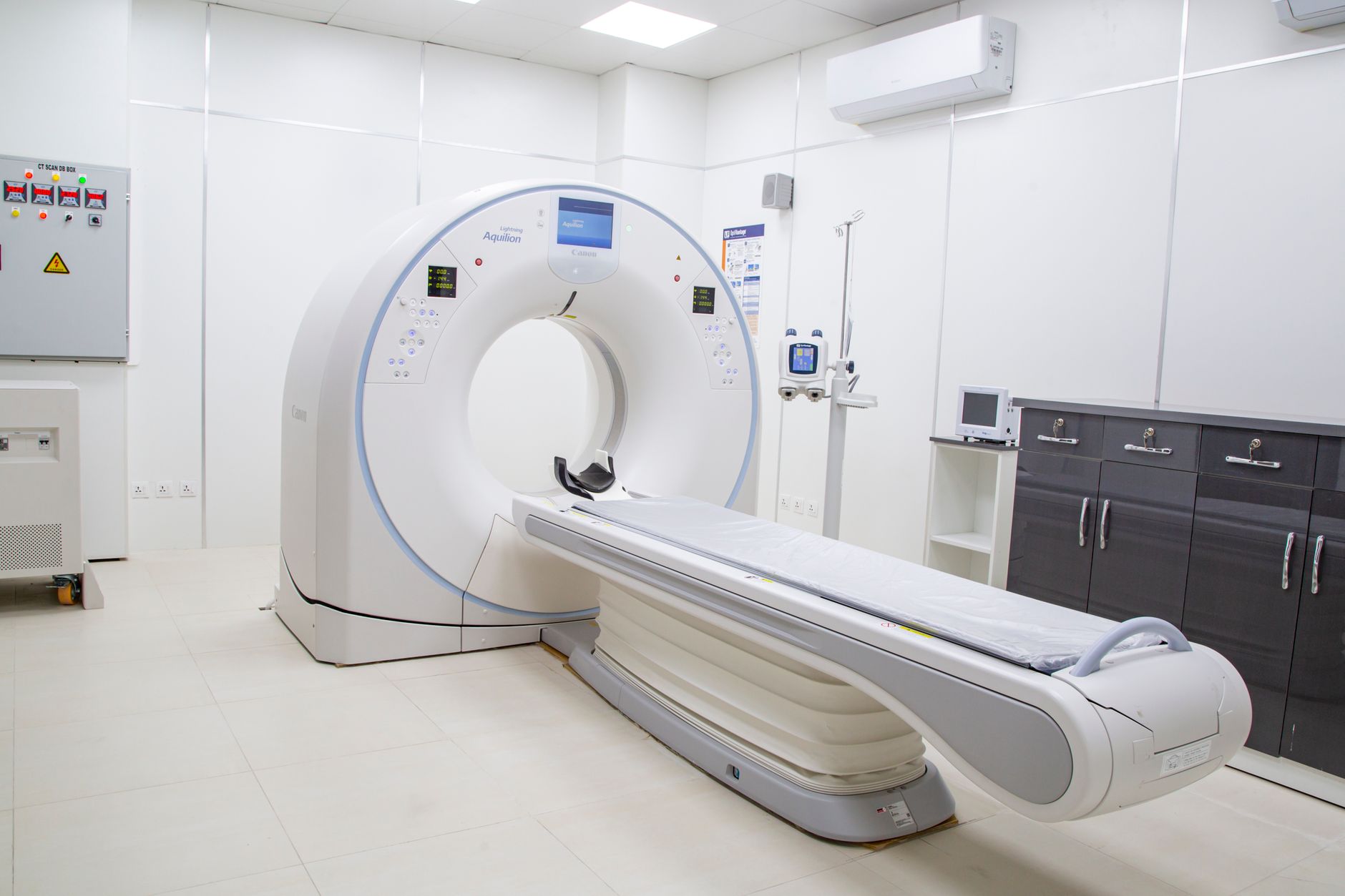
The thought terrifies me. I’d have to lie on a tray of bulletproof plastic, covered with protective paper; the team would then click a few buttons from their office and send me shooting into the machine’s epicentre, like I’m a pizza being pushed into the core of the oven to make sure I get cooked on max.
MRIs are not all bad. You now at least get earphones for when you’re inside the machines, with a limited choice of channels (classic, pop) to cancel out the clanking noises. Scientific progress means it’s taking less and less time to carry out the scans, now down to between 30 minutes and an hour for a decent picture of what’s happening inside your brain.
You’re making it up
The arrival of these monolithic brain-scanning machines has marked a sea change in the treatment of patients with neurological illness. For centuries, many with these diseases were told they were making up their problems, that they were just neurotic attention-seekers.
Now scanning technology can prove whether people are telling the truth; it can see whether a disease really is eating away at our brains, like moths nibbling on the finest fabrics in the house.
I don’t know it at the time, but this shingles carry-on is serious. It’ll trigger my worst ever MS attack, which will lead – though only temporarily – to losing the ability to walk, talk and write.
Steroids can stop an attack
Going for that MRI back then might not have been such a bad idea. The medics might have worked out much sooner what was happening and put me on steroids to stop the attack from going on to cause so much damage. I can’t replay the past, much though I might wish I could, and I’m almost certainly trying to bolt the stable door after the horse has long gone. But, nowadays, if a doctor suggests a brain scan, I meekly accept it has to be done and go wherever instructed. I might have to take a prescribed pill or two before being fired into the machine’s epicentre, but that’s as far as my rebellion these days goes.
 Helen Fowler Writer
The fear of the unknown within the context of one’s own history can get one into a downward spiral in an area of our imagination that we never considered previously.
LikeLiked by 1 person