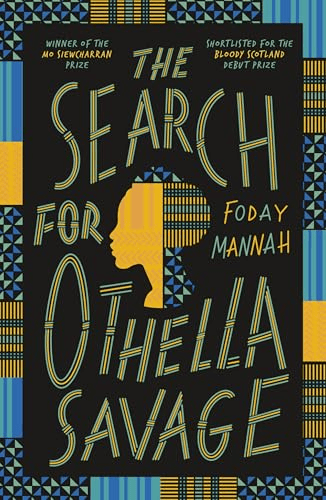
You might be surprised but Foday Mannah’s Edinburgh isn’t the city of Harry Potter, Miss Jean Brodie and shouts of gardy loo. Nobody’s emptying chamber pots into the streets in this brilliant, modern-day Scottish title.
The Edinburgh we do see in these pages is tougher, grittier, more dangerous, kinder (oddly) and more authentic than all the clichés want us to believe.
Mannah’s début novel The Search for Othella Savage has introduced me to a side of Edinburgh I hardly knew existed, despite living here most of my life. Shame on me, you may be thinking. And there’s truth to that, I admit.
Sending money home
Turns out there are several hundred people from Sierra Leone living in Auld Reekie, many of them grafting away in unpleasant, badly paid jobs to scrape money together to send home to families in Freetown.
The novel is an eye-opener, allowing us to see a side to the city that’s normally – shamefully – hidden from view. We get a glimpse into the dangerous, precarious lives of the women here illegally who daily vacuum our hotel rooms, tidy our clothes and make our beds. It’s humbling.
Badly paid
I did that kind of work myself once, as a student. It’s tough and demeaning. In fairness, I probably already had MS by then, which might explain the emotions and exhaustion, but I can’t say I was sorry to leave.
Unlike the women in Othella, I didn’t have to stay in that job long. Instead, stints in London journalism awaited me; these days I don’t work at all because of disability. The women in Othella get little respite from their work, the main upside being their good nature and kindness to each other.
A zany friendship
Hawa, the female lead, meets American singer Anaka by chance in one of the hotel rooms she’s cleaning. The two strike up a zany friendship that sees them investigating a woman’s disappearance together. They’re a likeable, sympathetic pair; I worried about them, wanting them to check their phones were switched on before they went out. They’d probably have just rolled their eyes if they’d heard me . . .
Lurking in the background to the women’s lives is the Lion Mountain Church. The place is financed by behaviour dangerously close to prostitution, vulnerable young women are pimped out to wealthy older men, who, we eventually discover, are being primed to give money to the church.
Karaoke and hair
The women who’ve disappeared were somehow involved in this nastiness, we learn. We’ve got to know some of them better by now; how they much they like karaoke, how they feel about hair extensions. Who they fancy, who fancies them. We like them, care about them.
The mystery deepens as the women travel to Sierra Leone together for Hawa’s sister’s wedding, an event paid for largely by poor Hawa.
Then, not long after getting back to Scotland, Hawa finds herself fighting for her life as someone tries to bundle her into their car boot too.
Growing up in Sierra Leone
I didn’t enjoy reading the car boot stuff, but loved finding out more about what it must be like living in Edinburgh after growing up in Sierra Leone.
The Story of Othella Savage introduces us to the marginalised world of international workers on minimum wage, men and women deserve more visibility and Foday Mannah, vastly to his credit, does just that for them in this brilliant, beautiful novel.
As I was reading, I briefly remembered an old boyfriend, a wealthy guy without any money problems. At no point in our relationship did he even once display even a fraction of the joy and fun Hawa and Anaka take in their daily lives and in their modest home. There’s a quiet, understated wisdom to this book that has got its values absolutely right. I recommend it highly.

